
There is always room to learn more, whether you are just starting on WordPress or have been blogging for years. Check out this WP site, especially if you need help or feedback!


Postaday

Join the Challenge!
Writing 101
Blogging 101 Badge
1
There is always room to learn more, whether you are just starting on WordPress or have been blogging for years. Check out this WP site, especially if you need help or feedback!
Earlier today, while the power went out for the second time this hot Caribbean Auguat afternoon, I pulled up my iPad mini to see if my portable Internet hotspot was working. Whew! It was! It’s quite a bit slower than our household internet access, but it can get the job done so long as the relay station didn’t get zapped by a local outage.
About a month or so ago, Apple (which clearly knows too much about me!) sent me an email announcing a new app I might want to check out. The app is called Zentangle Mosaic, and it is from the originators of the art form known as Zentangle. I checked out the free app, and found loads of beautiful tangles, some even by regular people; that is, not Certifird Zentangle Teachers. The problem with the free app is that it has certain limitations–ones that may not matter to people with a passing interest in the art form. Everyone can get lots of inspiration from the free app, but I wanted to be able to comment, ask questions, and maybe learn more than what perusal of the tangles could give me. So I did something I rarely do. I bought a membership in the app. I was disappointed that the app was good for only one year, but I have been disappointed by certain aspects of the originators’ policies on other things. So I bit down on my bottom lip and signed up for a year–only because, if I remember correctly, it was less expensive to do so than to keep renewing monthly.
The main reason for my subscription was because I wanted to continue learning new patterns that do not show up in books about Zentangling. As I study the tangles that have been uploaded to the app (something you can only do as a member, by the way), I want to identify ones that I am interested in learning and applying. Unfortunately, I need to look elsewhere if I need help with learning a new pattern, but even at an outrageous fee (even for the Apple apps store), “how-to” is not part of the membership*. For that, I need to go to YouTube and hope someone has been kind enough to post a demonstration.
Today, while searching for some inspiration for a new tangle, I came across a pattern that intrigued me–not because it was beautiful or unique, but because it appeared to be a melding of two patterns I already know. After doing a search on a few of the pattern names, I figured out the name of this new pattern. It is called Indyrella, and obviously was named for the pattern of cars coming and zipping past an onlooker. Here is a sketch I made of this pattern in my sketchbook.
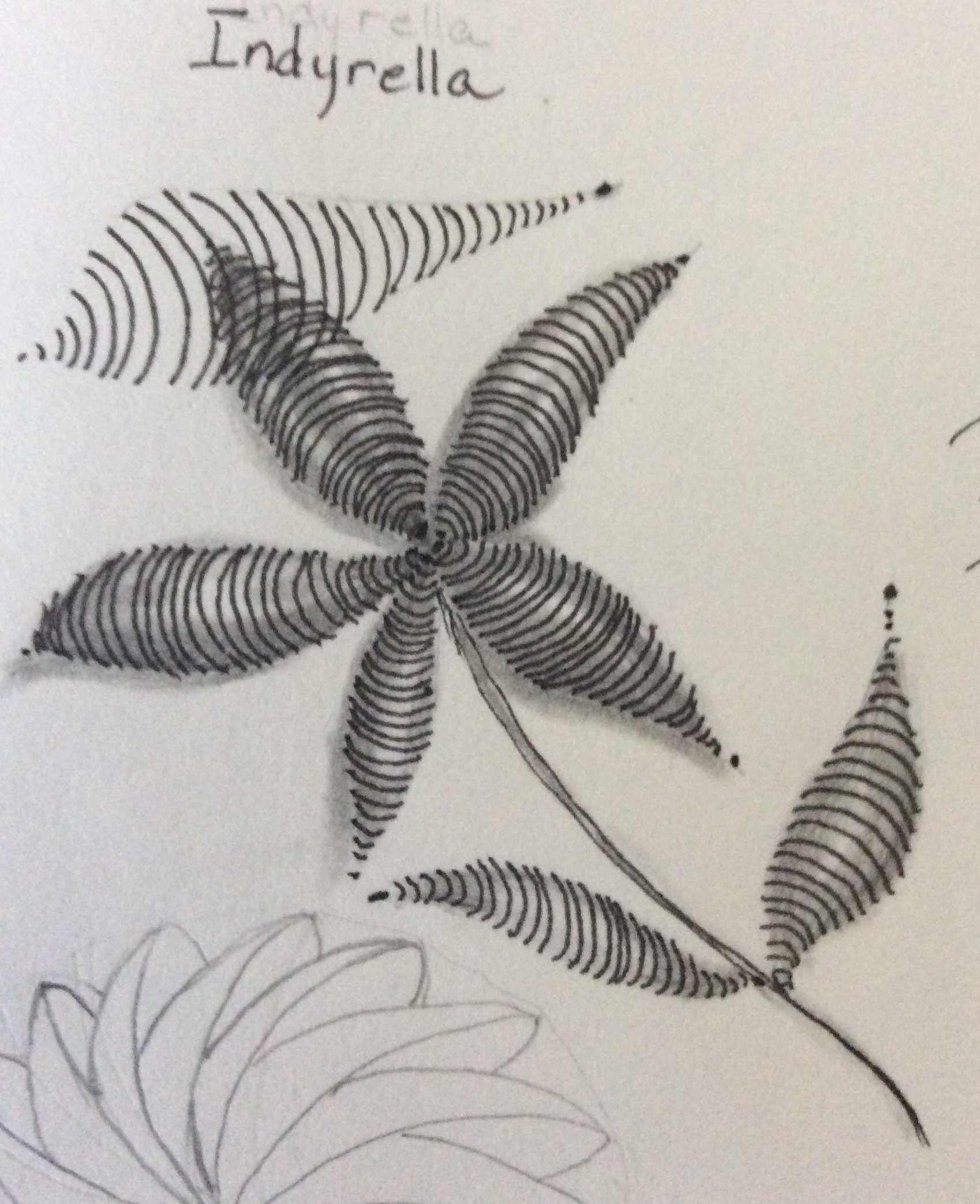
In the background is the actual pattern. In the foreground is a what used to be my “signature flower” from about sixth grade to well into my fifties when I simply stopped using it. It was a simple line sketch. Inspired by member emmacrew‘s simple but beautiful work, I tried my flower as a Zentangle pattern.
Of course, while looking through the displayed tiles, I found another pattern or two I wanted to learn about, such as Philcaps in the lower part of the photo, but that’s for a different day.
Still inspired by emmacrew, I wanted to play around with Indyrella. I wondered what my flower would look like if I used a V pattern instead of curves. And that led to something not quite what I wanted, but not bad. I simply drew the Vs going the wrong way. I would have drawn another, reversing the Vs, but I lost the light. And the power was still off. 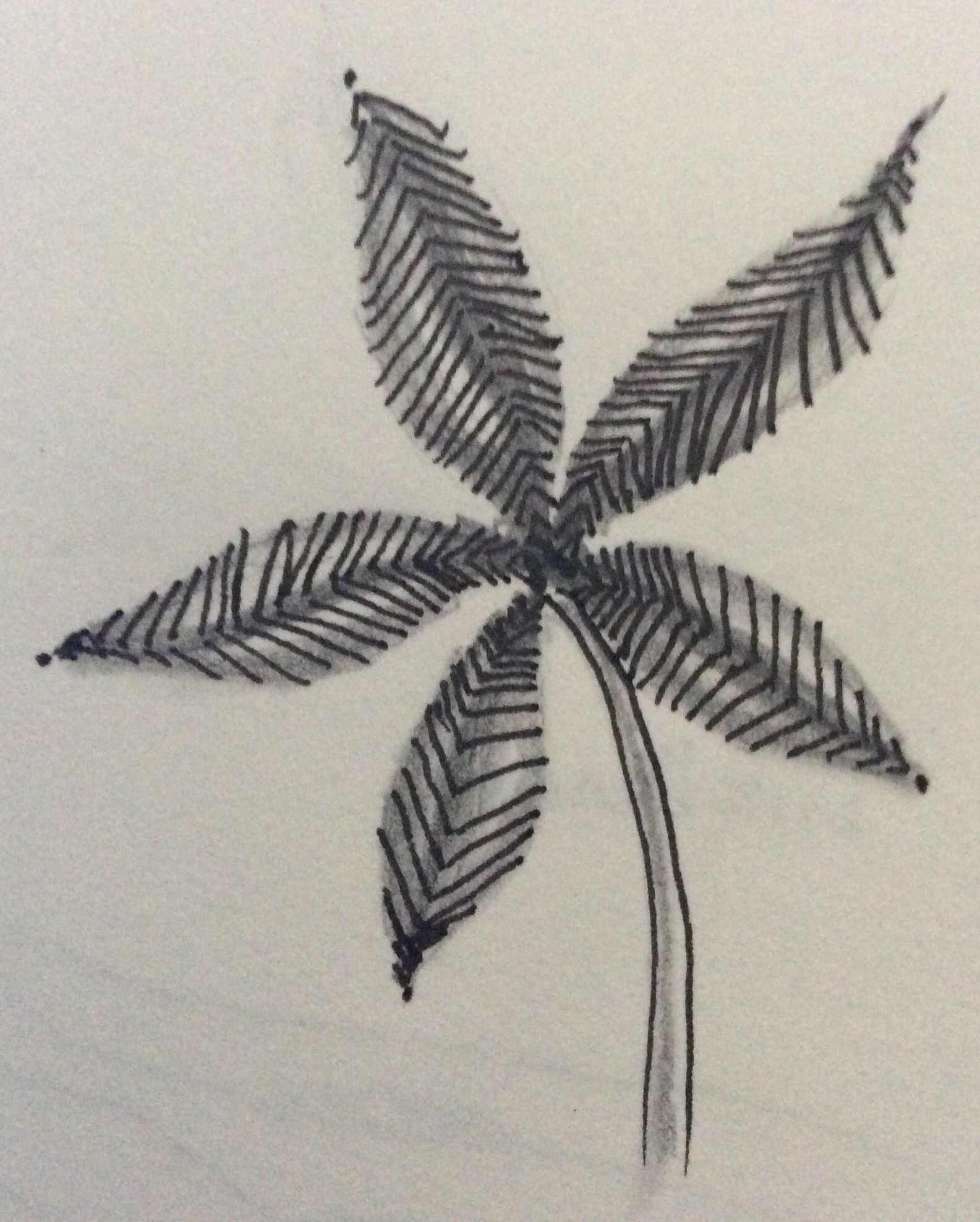
In all, I guess what I created is a “tangleation” of the original pattern. Now that I have played, I will try to create a tangle using either Indyrella or the modification–or both!–tomorrow when I have more light.
For today, I am done with drawing, waiting around for power to come on or go off, letting people wiring our community for fiber optic Internet service in and out of the house, and just being grateful that I actually cooked dinner this morning–had to use my electric pressure cooker since I ran out of propane a few days ago and haven’t gone for more–and now trying to figure out if the power will be on long enough for me to reheat the meal in the microwave this evening, or if it’s going to be another evening of local take-out, and…
Too much information…
Happy tangling!
* I was wrong when I wrote this. In fact, deconstruction of the patterns is in an area I discovered (after posting) called Step-outs. Not sure if this is part of the free app. I am liking the Zentangle Mosaics app more and more. Worth the investment.
##
Lately, it seems to me that every blogger I have followed for several years has turned to creating writing challenges of one sort or another. Whether to challenge themselves or to simply and genuinely challenge others, or even to try to combat periods of writer’s block, the challenges are growing. Maybe I should start a challenge or two for all to share. And I have the perfect place in mind…
Several years ago, WordPress granted me a site that allows writing collaboration. Although it started out with five or six beginning and intermediate writers, it only lasted a few weeks before I pulled out of it for security reasons. Not WP’s security, but the security protocols on my devices whose Kaspersky security appeared to have been breached. That was a long time ago, and Kaspersky has fixed its problem. However, I never got back to maintaining that site. The site would be perfect to host writing (and art) challenges and allow communication among authors and artists.
Enough history. A weekly challenge seems most appropriate to me. Since this weekend is a holiday one for Americans, maybe the “due date” for this one should be in two weeks. That’s Monday, September 12, 2016. It’s fine to post earlier, even multiple times.
I have two quotes that I thought might be of interest to both writers of prose and writers of poetry, as well as photographers and other artists. Let’s limit poetry to 50 lines, and stories to 1200 words–give or take. Share only one work per “part,” but feel free to The quote or passage does not need to appear in your work unless you want it to. If you share an original photo or piece of art, please limit yourself to one photo or artwork per challenge “part.” Also, please include the words–phrase or quote–that inspired it as part of your post.
For now, please leave a link to your work in the comments for this post. That is, post it to your blog and leave a link to it here. (I never know if I am making sense…). You may wish to post a comment with your link that relates to the linked work.
Quote 1 is actually just a partial line that I found particularly interesting. I am not sure what book it came from, but it’s one I have read during the past few weeks.
— freaks, friends, fools, and failures—
Quote 2 is longer, and comes from a YouTube video I saw months ago. It seems to me I linked to it from National Geographic, but it could have been from the Smithsonian or an ecology-related site. Yeah, I know. I have a weird range of interests.
What is so amazing is that…the rivers changed in response to the wolves. … So the wolves, small in number, transformed not just the ecosystem of the Yellowstone National Park–this huge area of land–but also the physical geography.
Once I investigate that old site a bit more (it may take several discussions with the WP techies), we’ll start working from there. That is, if there is enough interest to keep DrEllie’s challenges going.
Meanwhile, feel free to share ideas, quotes, phrases, etc. that you would like to see for the next challenge. Leaving the selection(s) up to me might become trite after a while. After all, my strengths do not lie in creativity… 😉
Enjoy!
##
A new Esther Newton writing challenge for the last week of August. Happy writing! 😊
Here’s another challenge to help your writing week get underway:
Write a flash fiction piece of between 50-100 words with the following line in it somewhere:
If she didn’t stop doing that soon, he was going to kill her.
Last week’s challenge was to write a flash fiction piece of between 50-200 words with the following three lines in it somewhere:
Here are your varied and simply fantastic pieces:
Rajiv Chopra brings us another brilliant installment in his Mary Jane series:
His beer spilled. The glass smashed to the floor. That is when I realized it. He was in love. Yes, damn it. Sam was in love with Mary Jane Parker. I do not understand why she encouraged him. Yes, he has been my friend, my companion, my support…
View original post 306 more words
The current novel I am reading is about a vampiric private investigator. True to common lore, she does not show up in mirrors. And she does not show up in photos, either, but that may or may not be part of lore. Let me explain.
Vampire mythology appears to have been popularized after the introduction of mirrors, but long before the introduction of photography. Earlier cameras took images by using a series of mirrors to focus light. Digital cameras, however, don’t rely on mirrors (as far as I can tell), so the idea of a vampire not appearing in modern photos no longer makes sense. Perhaps without realizing this, Charles Stross addresses the camera-ready vampire in his Laundry Files series by allowing his vampiric characters to dress and primp using laptop cameras even though they do not appear in mirrors. I honestly don’t remember if he ever went into this apparent mystery in his books, but it really does make sense, once you remove mirrors from cameras.
As authors, we strive to keep our characters in tune with their times and/or the rules we established for their worlds. For fantastical fiction, the writer either follows the rules of similar worlds or creates a new set of rules governing the environment–natural laws, if you will, that govern that world. As readers, we can suspend belief in the natural laws of our own world and place ourselves in the environment of the author’s world as long as the rules are consistently followed within that world.
In terms of lore within our own world, certain characteristics or law-breaking mechanisms are acceptable if the lore itself is accepted. So, with vampires, we accept that their images cannot be captured by mirrors; although photographs using mirrored cameras would result in no image of the vampire, digital cameras (which use no mirrors) should now allow the image of the vampire to be captured.
This was just a passing thought…
##
So I am reading through my email when I come accross a book blog from Amazon.com. It’s in the Science Fiction and Famtasy newsletter. Although I know Amazon’s book editorial staff is very on-the-ball about books and Amazon readership, I was still surprised to find a post related to this year’s Hugo Awards, a real big deal to science fiction and fantasy writers and readers. What immediately caught my attention was a reference to the apparent rift between the rather rigorously “hard core” awarders and the rest of the SF&F community. The chasm between the two has become great enough this year, apparently, to leave several award categories without a clear winner. *
Find the post (which contains a link to all award categories) here: Hugo Awards
My husband is a supporter of “hard” SF, and we are constantly arguing about the meanings of “good science” versus ideas that inspire hard science findings. Although I admit to not being a big fan of the Star Trek type science fiction series, I think that there is a lot of merit to the novels that can reach more of the general population instead of just scientists and mathematicians. For example, Charles Stross’ Laundry Files series may contain mathematical and physics references that don’t mean a great deal to me, at least Stross uses English to explain a lot of the passages that make my eyes water. I figure he gives readers the option of skipping either the scientific/mathematical jargon or the simpler explanations written in plainer terms. Either way, he keeps both the hardliners and the merely interested –well, interested.
Visit the blog from Amazon to see both the nominees and winners (where clear winners emerged).
* Addendum. Apparently, a certain percentage of award (25%!) ballots need to be received for a nominee to qualify as a finalist. That means that, regardless of placement, some categories end up with only one or two qualifying choices. There was apparently enough disagreement among nominates/voters so that no actual majority is achieved in several award categories.
##
A new writing challenge from Esther Newton!
Enjoy. 😊
It’s that time of the week again – challenge time. Here are my latest challenges for you:
OPTION ONE: Write a fifteen-word story with the words HUNGRY, TAXI and SUPERMAN in it somewhere.
OPTION TWO: Write a poem or limerick on the theme of FOOD.
OPTION THREE: Your word is AUTUMN. Yes, it’s just around the corner. What does autumn signify to you? The end of summer? Glorious colours on the trees? Christmas?! Your piece can be a true-story, or completely fictional.
Here are last week’s challenges and the wonderful array of writing:
OPTION ONE was to write a fifteen-word story with the words WINNER, FROZEN and ELIXIR in it somewhere.
Paul:
A real winner? Frozen elixir of youth. Instructions: won’t keep long, use within three month!
Too late. She stood frozen. Elixir? Stolen. That bitch? The winner. Her prize? My Prince.
Urvashi…
View original post 450 more words
Often, when I pick up a book that is part of an already published series, I tend to read one book after another. Sometimes, this works well, as it does not give me time to forget characters or events that are mentioned in later books. Other times, the reading becomes tedious, especially if the author uses the same words or phrases too often, or repeats information that was new five pages ago. Right now, I am reading a series by a former employee of the makers of Dungeons and Dragons. I am on the third of what is currently a four-book series, and I am getting bored. So I sketched to break the monotony before I continue with reading…
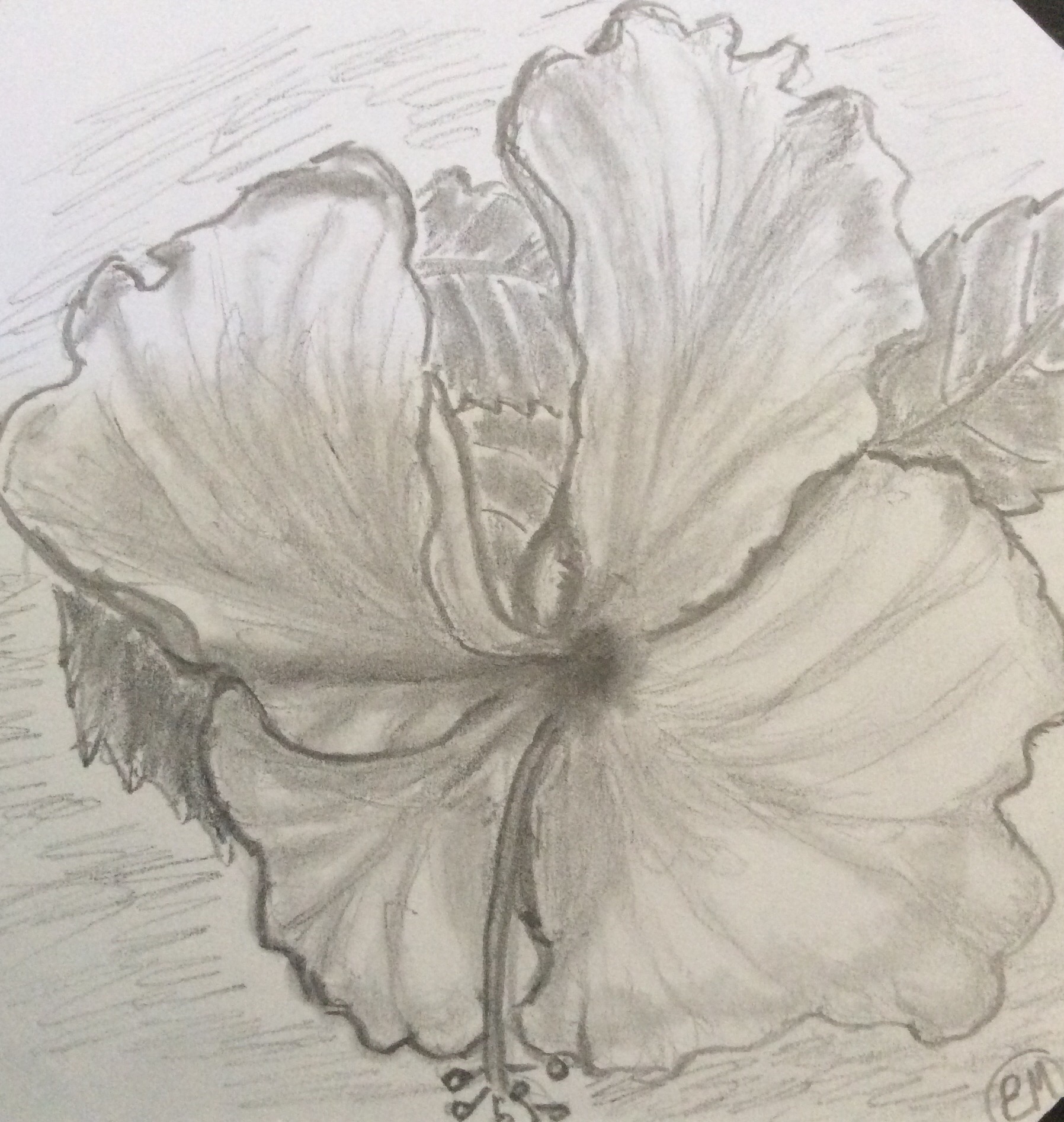
As I drew, I began to think about this series. It could be that the books were written with the adolescent boy in mind, or maybe the teenaged girl, as the main character is a young adult woman of not yet twenty years. The thing is, it doesn’t matter. If an over-thirty adult picks up a book for young adults–or even toddlers!–and finds the reading interesting, then the book most likely is better than most. If the adult gets bored with it, chances are good that the intended younger audience will get just as bored, and probably a lot quicker. The fact that I, an avid reader and former reading specialist, am feeling a tedium makes me think that these books will probably never be cherished by younger readers, and so will never become classics.
Regarding repetitive information… Not being much of a writer, I cannot guess at what happens in an author’s mind when he or she is writing a series. I have read series that, when referencing something from a previous book, provide just enough information to keep a new reader interested and an old reader reminded of the reference. Books (and series) that repeat information too often–especially in the same book–make me think that either the author needs to remind him/herself of the detail, or expects the reader to not remember that the information has already been presented at least once previously. In my opinion (as a reader), if the important information was not presented with adequate emphasis the first time, then it should not suddenly become a source of inspired guidance to the behavior of the character later in the book. But that’s just me and my opinion. Even when an author seems to feel I, the reader, have the attention span of a gnat, it is rather insulting to believe that I would not remember that I already read the detail earlier in the same book, possibly as little as two pages ago, and possibly more than once before. Writers, please review your writing so that all your information is fresh.
Regarding repetitive phrasing or words… Not long ago, I finished a long series of books that stars cats as the hero and heroines. The books were pretty good in terms of plots and even the behaviors of all the characters, feline and human. But as early as the first book, the author began to use one verb far too often. The first time I came across the usage, I thought the author had used the wrong word. When I came across it again a chapter or so later, I decided to look up the definition to see if there is a usage I am not aware of. It turns out that the verb to scorch means more than just burning a shirt with an iron that is too hot; it is a Britishism–apparently a little-used term at that–that indicates great speed of movement. OK. I now had a better understanding of why the author used the word. But the use of an archaic meaning also called attention to the frequency of the word’s use throughout that first book–22 times, I believe. And its appearance continued with similar frequencies for the next four or five books in the series. Then suddenly, as though someone called attention to its over-usage, the frequency with which a cat scorched up a tree was diminished to fewer than four or five times per book, almost disappearing before the last book in the series. It was a lot easier to read the rest of the series.
The reason I call attention to the problem of over-using words and phrases is that it tends to interrupt the reading of the book. Just as to many of us, a missing word or one that is continually misspelled can stop us reading mid-sentence, a single word repeated too many times throughout a book can derail smooth reading, especially since the way the author uses it is rare or unique or unexpected to begin with. Writers, read your work critically for over-use of “favorite” words or phrases. If you don’t catch it, your readers will, and chances are good that they won’t be happy–if the word or phrase appears too often, the reader is likely to lose interest, not because the book isn’t good, but because of too many interruptions to a smooth read.
So back to the novels I am currently reading… I am about halfway through the third book. At this point, I am reading it because I have invested a lot of time in reading the first two. There is no novelty to this fantasy series any more. Even the way it the books are written, with cliff-hangers at the end to encourage purchase of the next book in the series, is getting old. All the “and then…”-type actions are a bit tedious, but not enough to put the books down. But… The heroine has wished for the presence of her husband (and maybe eventual hero) for at least the fifth time since she parted from him near the beginning of the book, and the wishing serves no purpose, as far as I can tell. Perhaps the author–a male adult–believes that a strong female (of almost twenty years of age in a world where a ten-year-old can be sent as a representative of a government to a foreign land and whose life partner is two years her junior) would somehow suddenly have major misgivings about her own abilities in contrast to those of her younger heart-throb. As a not very strong female of more than three times the heroine’s age who knows a lot of very strong females of various ages, I can’t help wondering why the author would believe the heroine is in constant need of male support for her intended actions, especially since she is surrounded by a host of people (male and female) whom she admires. These individuals are strong characters in their own rights, and her belief in their advice is unconditional. So why all the teen-age melodrama? For this heroine and her fantasy kingdom, it seems to make too little sense for her to be questioning almost every one of her decisions.
My vagueness about the book series I mentioned is deliberate. I am not a good book critic. I have certain expectations from the fiction I read. Even fantasy or science fiction needs to be realistic for its setting and time. The Joe Gray series is entertaining and well-written except for the over-use of “scorch.” The Muirwood series which I am now reading is basically soundly written in terms of writing style; that it does not conform to the characteristics of my view of a strong female lead is probably a personal prejudice. It is these prejudices that make me feel unqualified to adequately critique books. It is my personal expectations that I am addressing above.
Having expressed my feelings, it is time for me to get back to that third Muirwood book. Maybe sharing my frustrations will give me a fresh perspective on the rest of the book I am reading…
##
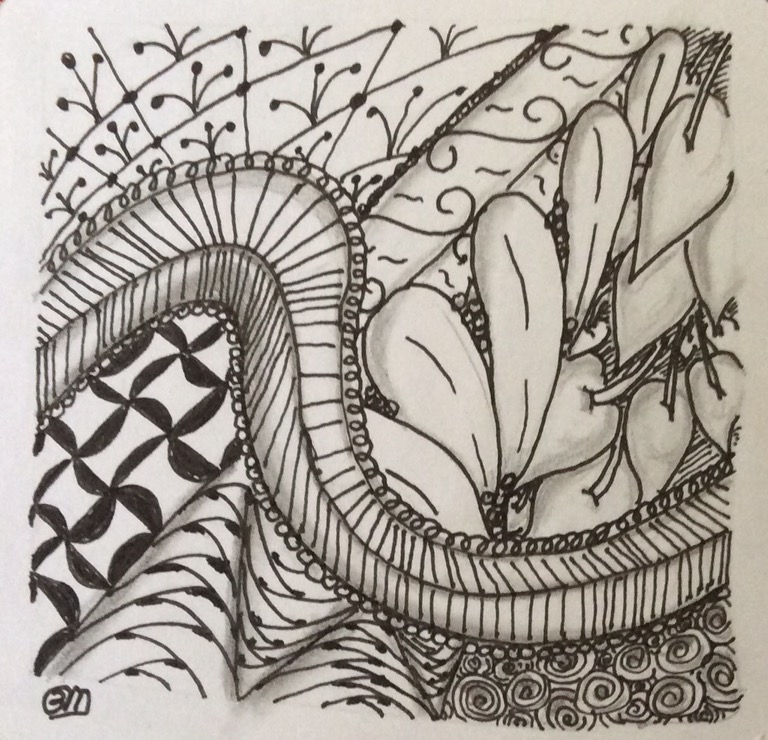
It was just another day when my husband planned to be home. Last night, I strongly suggested that he may want to go into his office and catch up or get ahead, while things were relatively quiet with his job. It is between terms, and the students are gone for another week or so. Once the new term begins, things get a bit crazy.
This morning, it looked as though he were going to stay home. Thank goodness, around mid-morning he remembered some correspondence that needed his attention. It is not easy to ask your life partner to just go away…to stay home another day. Just not today.
Sigh.
##
Proofreading basics…


Proofreading is a vital part of writing a blog post, and if you create your own list of things to edit for it can also be one of the easiest.
Source: Proofreading 101 – The Ultimate List of Things to Edit For – The White Corner Creative
Join the Challenge!

 Write of Passage